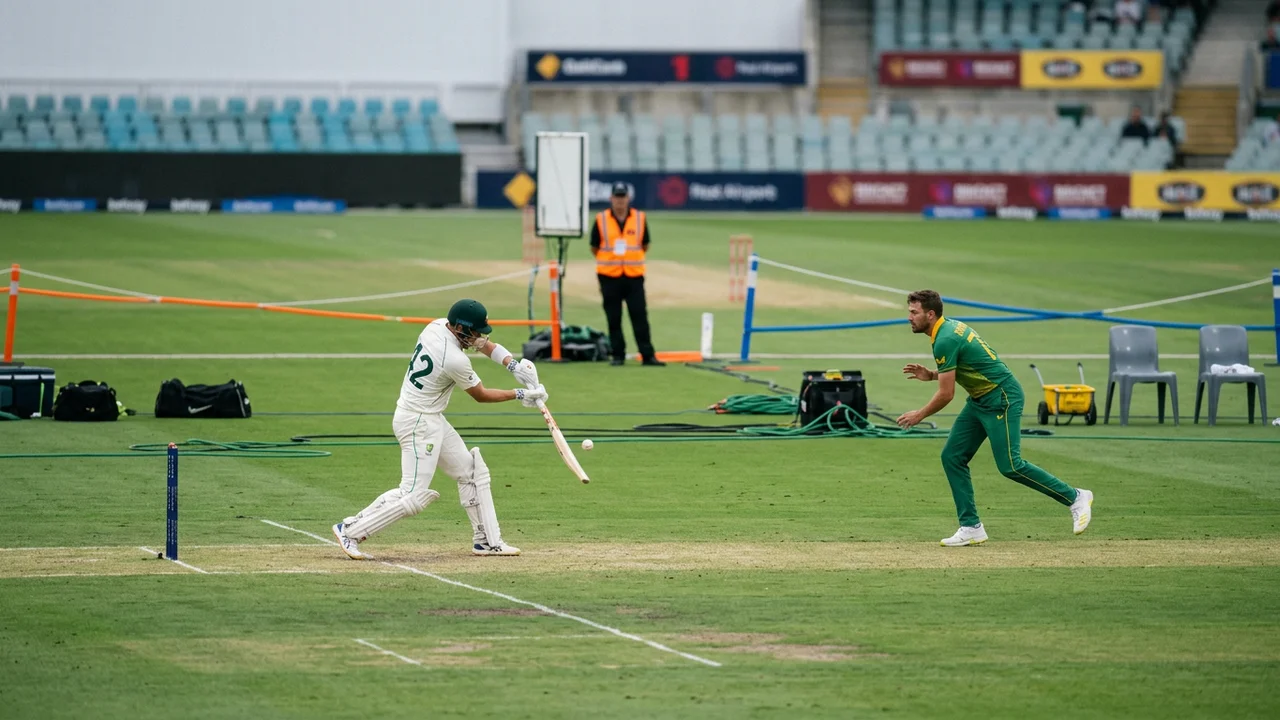
Australia crashed to just 99 all out in Gqeberha, their lowest Test total since 2023. Forced to follow on, the visitors have not only lost control of the match but also set off alarm bells in cricket’s financial corridors.
No Australian batter reached 30. The top score, Steve Smith’s 28, came as he battled persistent neck trouble, a concern now looming over selectors and contract managers. The highest partnership was a meager 23. Such a collapse throws the value of Australia’s top-order assets and the security of their long-term contracts into sharp relief.
South Africa, meanwhile, have seized the moment. Marco Jansen’s 5-33, his fifth Test five-for, ripped through Australia’s lineup in under 40 overs on day four. His wickets. Scott Boland, Travis Head (lbw on review), Matt Renshaw, Alex Carey, and Beau Webster, came in a relentless morning spell. Jansen’s all-round display, especially alongside Temba Bavuma, will boost his market value and strengthen his hand in future contract talks.
Each Australian wicket piles pressure on Cricket Australia’s high-profile retainers. Rarely have they been forced to follow on, and the fallout could reach the negotiating table.
Bavuma’s masterstroke and South Africa’s commercial revival

Temba Bavuma’s marathon 179, his highest Test score, changed the series’ financial and reputational landscape. Over 552 minutes, Bavuma anchored the innings and, as captain, notched his fourth century in just 14 Tests at the helm. His average as skipper has soared to 54.36, up from 34.53 before. That leap is likely to translate into bigger commercial endorsements and a stronger bargaining position as South Africa’s on-field asset value climbs.
Bavuma’s partnerships were pivotal. He added 132 with Marco Jansen and a record 183 with Simon Harmer for the eighth wicket. These stands not only set new marks for South African Test cricket but also give the club leverage in upcoming sponsorship and broadcaster negotiations. Harmer’s role in the record partnership further elevates his own contract prospects.
Declaring at 425-9, immediately after Bavuma’s dismissal, was a calculated move. South Africa exposed Australia to tricky late-day conditions and struck early, removing opener Nic Maddinson within four balls. The Proteas now eye series parity, a result with clear implications for revenue sharing and performance-based bonuses.
Australia trail by 422 runs, facing a first-innings deficit not seen since 1984. That kind of statistical low can affect player incentives, insurance triggers, and the risk profile for future squad investments. The follow-on, invoked for just the third time in 38 years, underscores the volatility that can shake up contract negotiations and salary structures.
Fitness concerns are mounting. Anrich Nortje managed only 3.3 overs before a groin issue forced him off. His absence for the rest of the Test could influence South Africa’s bowling contracts and depth chart, depending on his recovery.
South Africa’s surge from 110-6 to 425-9 declared shows how quickly asset value and squad morale can swing. Australia’s collapse, leaving them 326 runs behind and following on, exposes vulnerabilities that may force Cricket Australia to rethink contract lengths and squad composition.
As the Test in Gqeberha nears its conclusion, club executives and contract analysts are watching every session. South Africa’s on-field and financial resurgence has rewritten the risk calculus for both squads. Jansen and Bavuma now set the pace in conversations about market value and future investment.