World Cup 2026 Dark Horses: Expert Predictions & Latest Betting Odds
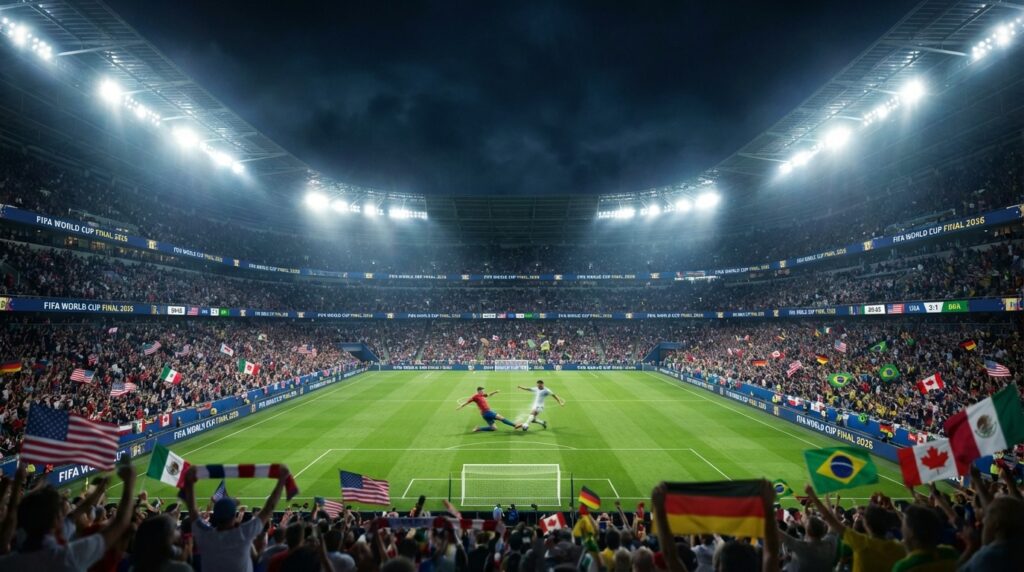
On the road to 2026, the FIFA World Cup™ is breaking new ground, welcoming 48 teams to the grandest football event ever staged. The United States will host the FIFA World Cup alongside Canada and Mexico, promising an unprecedented spectacle spread across diverse host cities such as New York New Jersey, SoFi Stadium in Los Angeles, and Kansas City. The expanded format, new match schedule, and the recent group stage draw are reshaping the global football order, sparking debate: can outsiders again shock football royalty? We deep-dive into the world of dark horses, reveal expert predictions, dissect betting odds, and bring you the buzz sweeping through World Cup fans. Which teams carry the hearts of a nation and the dreams of an upset? And how do bookmakers and tacticians rate their chances as we inch closer to the opening match? Welcome to the definitive guide for the World Cup 2026 dark horses where data meets destiny and no ticket is too small for hope.
Key Takeaways
The FIFA World Cup 2026™ features an expanded 48-team lineup, fueling new ambitions for dark horses.
Confirmed teams and group draws are already shifting betting odds and changing expert perspectives.
Modern dark horses are defined by tactical discipline, resilience, and ability to manage knockout pressure.
History offers clues think Ghana 2010, Morocco 2022 but 2026’s landscape is bolder and more unpredictable.
Uruguay, Japan, Colombia emerge as serious contenders given unique tactical identities and recent form.
Other outsiders like Norway, Morocco, Senegal carry promise, but also risk and key vulnerabilities.
Betting markets favor Spain, Argentina, France, Brazil, and England, with odds reflecting recent squad evolution and form.
Responsible gambling: key as stakes, excitement, and unpredictability soar.
For a detailed breakdown of predictions and the latest odds, bookmark our World Cup tips page.
2026 World Cup
Qualified Nations & Odds
Impact of Expanded 48-Team Format on World Cup 2026 Dark Horses
Confirmed Teams and Group Stage Draw Influence on Betting Odds
The journey to the FIFA World Cup 2026™ has already been mapped for the 42 confirmed teams leaving just a handful of World Cup spots up for grabs before the last pieces fall into place. Following the draw for the 2026 edition, twelve groups of four teams have created a dynamic where traditional powerhouses cannot coast through the early rounds. The match schedule, designed by the organizing committee, stretches across sprawling cities across Canada, Mexico, and the U.S. from the iconic SoFi Stadium in Los Angeles world cup 2026 host, down to the vibrant streets of New York New Jersey. The expanded format, with 104 matches, means more chances for underdogs to orchestrate upsets, especially as fatigue and travel logistics begin to challenge elite squads.
This new structure is already translating into volatile odds on bookmakers’ boards. With the group stage introducing varied opposition levels, teams that fall into softer groups may see their odds shorten rapidly after the draw, while others drawn into “groups of death” face steeper betting challenges. This unpredictability injects massive value for punters following World Cup tips and tracking day-by-day changes. The confirmed national teams’ identities and matchups have never mattered more in shaping the outlook for dark horses.
Expanded Tournament Dynamics Reviving Dark Horse Opportunities
The transition to 48 national teams in 2026 reinforces the spirit of the global game. Each group stage now hosts group stage matches where even debutants face legendary names in world-class venues. With the round of 32 replacing the old Round of 16, teams have additional games to find rhythm and momentum. This sort of schedule gives traditionally mid-tier teams like Japan or Senegal an increased margin for error and more experience under high-stakes lights. More single match knockouts mean that on any magical night, a tactical masterclass or a defensive stand can lead a dark horse far beyond expectations.
Tournament fatigue also becomes a factor. Unlike previous editions, navigated in a few compact cities, the host cities for FIFA World are spread from Toronto to Mexico City, placing a premium on squad depth, travel adaptation, and medical teams. Scientific planning, rotation, and recovery protocols, as championed by the FIFA Club World Cup’s leading clubs, become central to success. No wonder oddsmakers are keeping an eye on teams with deep benches and proven stamina.
Defining Modern Dark Horses: Tactical Discipline and Knockout Resilience
In today’s football, a dark horse is no longer a team that simply exceeds expectations on raw adrenaline. Managers and fans know that tactical discipline, team consistency, and mental fortitude in knockout duels are what distinguish a genuine contender. Look for teams who boast a core of players from strong domestic leagues, blend experienced heads with youthful exuberance, and show the ability to manage pressure moments.
Defensive solidity, control in transitions, and flexible tactical responses these are the tools required. Recent World Cups reveal dark horses who joke about their underdog status, but actually plot upsets with military precision. The 2026 edition turns the spotlight on coaches who can cultivate collective resilience and steer their teams through adversity, regardless of crowd hostility or the lure of ticket prices in world-class venues.
Historical Dark Horses: Lessons from Ghana 2010 and Morocco 2022
History offers its own playbook. Ghana’s heart-stopping journey in 2010 remains a template for African ambition: a side brimming with unity, physical power, and tactical adaptability, falling only to Uruguay after an infamous penalty shootout. Twelve years later, Morocco’s 2022 semifinal run on Qatari soil stunned the world not just for its defensive performances, but for a tactical flexibility that left giants like Spain and Portugal bewildered.
Both success stories stemmed from a foundation of defensive discipline, opportunistic counterattacks, and stars who seized the moment. Today’s 2026 dark horse contenders would do well to learn from these blueprints: defy odds, but never lose shape; frustrate, but always look for the killer blow. As expectations rise for World Cup 2026 and FIFA’s expanded format, the next Morocco or Ghana may already be plotting their path through the host cities for the FIFA World Cup.
Comprehensive Analysis of Dark Horses and Favorites for World Cup 2026
2026 World Cup – Interactive Teams Table
| Flag | Team | Region | 🏆 Odds | Favorite |
|---|
About
48 teams will participate in the 2026 World Cup hosted jointly by the United States, Canada, and Mexico. Odds are indicative and based on recent performances.
Dark Horse Candidates: Uruguay, Japan, and Colombia Tactical & Market Assessment
When discussing serious outsiders for the FIFA World Cup 2026, Uruguay immediately compels attention. Marcelo Bielsa’s tactical approach fast, vertical, and brave mines Uruguay’s tradition while adding modern aggression. The squad possesses ball-winners and artists in equal measure, but Bielsa’s relentless pressing brings risks: can their aging leaders weather six or more high-intensity matches, especially across the cities for FIFA World Cup?
Japan emerges as an energetic dark horse, structured in defense and explosive in transition. Their recent victories over Germany and Spain in friendlies and an impressive Qatar 2022 campaign demonstrate how well-coached, technically sound teams can unsettle giants. Japan’s underdog stature keeps their odds tempting; bookmakers remain wary as they’ve consistently frustrated elite opposition.
Colombia is staking its claim, riding a surge of momentum after notable victories against Brazil and Germany in the past year. Guided by a new coaching philosophy, Colombia blends flair with tactical calmness notably more measured than past incarnations. If overlooked by bookmakers again, Colombia could reward those who keep faith.
Evaluating Other Outsiders: Norway, Morocco, and Senegal’s Strengths and Challenges
Analyzing the broader pool of contenders, Norway is a textbook risk-reward proposition. Having Erling Haaland guarantees a relentless scoring threat, but their supporting cast struggles to maintain balance under sustained pressure. Defensive lapses and a patchy qualification path raise questions, even as Haaland’s celebrity boosts their media and betting profile.
Morocco still rides the afterglow of their 2022 semifinal, celebrated for stifling Spain and Portugal with warrior-like organization. Yet, the shock is now gone opponents have adapted, and the psychological burden is heavier. Whether they can repeat that magic, with the world watching and every move scrutinized, adds intrigue to their campaign in FIFA World Cup 26™.
Senegal stands as an African powerhouse if Sadio Mané and the engine room stay fit. The challenge: navigating the expanded group stage against sides eager to expose their occasional lapses in cohesion. The FIFA World Cup™ has a history of favoring the bold, but Senegal’s tactical discipline must be relentless from the opening match.
Team | Key Strength | Main Question Mark | Latest Outright Odds |
|---|---|---|---|
Uruguay | Marcelo Bielsa’s pressing, squad grit | Fatigue, depth in knockout games | 33/1 |
Japan | Cohesion, transition game | Lack of star power up front | 50/1 |
Colombia | Midfield control, recent big wins | Defensive lapses | 40/1 |
Norway | Erling Haaland’s goals | Midfield, squad depth | 66/1 |
Morocco | Defensive strength, belief | Expectation, tactical alternatives | 28/1 |
Senegal | Physicality, big game mentality | Fitness, group stage depth | 45/1 |
Integrating Latest Betting Odds: Bookmakers’ Perspectives on Dark Horses
Major betting providers drawing on the official FIFA World Cup data and form guides see dark horses fluctuating between 25/1 and 66/1 to lift the trophy. Market sentiment heavily rewards teams with star power, tactical clarity, and favorable group positions. After the March 26 group draw, it’s clear: odds on underdogs like Japan and Colombia have shortened, reflecting their buildup in form and strategic value for punters.
Uruguay: 33/1 – respected for their coach, but fitness remains a question.
Japan: 50/1 – steady movement due to recent giant-killing displays.
Morocco: 28/1 – boosted, but under increasing pressure to repeat past heroics.
Senegal: 45/1 – dark horse potential, but only if star players remain healthy.
The World Cup tips archives will be updated every matchday as these odds swing, shaped by friendlies, injuries, and news from tournament camps.
Top Favorites Breakdown: Spain, Argentina, France, England, and Brazil Odds and Form
Spain: Tactical brilliance, driven by prodigy Lamine Yamal and the genius of their youth setup. Their recent performances and fluid style have pushed their odds around 6/1; they are widely seen as a “team for the future” already made real in 2026.
Argentina: Champions in 2022, their rock-solid defense and unified core remain. Bookmakers hold them close to Spain at 11/2, especially as their transition post-Messi has been seamless under strong leadership and a cohesive squad.
France: Brimming with raw athleticism and tactical diversity, France glides through squads with depth and experience. Their 5/1 odds reflect both expectation and the reality of inevitable injury dramas yet, Kylian Mbappé’s presence terrifies anyone.
England: Powered by Jude Bellingham, Phil Foden, and Harry Kane, England’s attacking arsenal is stronger than ever. At 7/1, though, historical scars and penalty curse stories loom, no matter their match-winning quality.
Brazil: Their historical stature is impeccable, but the current squad is in transition. Neymar’s shadow lingers, and inconsistencies are costly. Still, bookies rarely write off Brazil set at 7/1, thanks to pedigree and a new generation pushing through.
Nation | Odd (Win World Cup 2026) | Top Player (2026) | Notable Feature |
|---|---|---|---|
Spain | 6/1 | Lamine Yamal | Youth, pressing, tactical flair |
Argentina | 11/2 | Collective strength | Defense, big-game maturity |
France | 5/1 | Mbappé | Depth, athleticism, adaptability |
England | 7/1 | Harry Kane | Attacking options, psychological battle |
Brazil | 7/1 | Vinicius Jr | Tradition, but in renewal phase |
Expert Metrics and Tactical Insights for Predicting Success in 2026
Football minds agree: smart predictions blend metrics and gut. Analysts pour over FIFA rankings, recent major tournament form, squad quality, betting odds, and historical success. For instance, in the buildup to FIFA World Cup 2026™, nations boasting a high club representation in top European leagues have fared best when paired with tactical innovation. A rise in single match knockout shocks often in world-class stadium arenas has led data scientists to boost “flexibility under pressure” as a vital performance indicator in their models.
On the tactics board, in-game management reading matchday atmospheres, tweaking lineups with micro-adjustments has become non-negotiable. March 2026 will see coaches scrutinized like never before, as the world eyes official FIFA World Cup 26™ statistics and instant replays. Winning here is part-data, part-art; numbers guide, instinct decides.
Lessons from 2022 Final: Unpredictability and Pre-Tournament Indicators
Recalling the epic showdown of 2022: pre-tournament indicators tipped Brazil and France, but it was Argentina’s unity and mental resilience that broke the deadlock. Tactical tweaking mid-tournament, key injuries, and game-day surprises these shaped an unforgettable final, echoing through the predictions for 2026.
The lesson? The unpredictability of knockout football weather, referee calls, a single red card means no favorite is ever safe. Teams arriving with late momentum or overcoming adversity (think Cristiano Ronaldo’s Portugal in 2016’s Euros) can flip the script in an instant. For fans and bettors, humility is essential; for coaches, adaptability is king.
Responsible Gambling Tips for Engaging with World Cup 2026 Betting
The World Cup experience is about passion, but also about healthy fun. Every supporter wants to turn that sense of anticipation into action, but responsible betting is non-negotiable. Here are essential tips for enjoying the ride:
Set personal limits don’t go over budget, no matter the bookmaker’s latest odds.
Focus on the entertainment, not just financial return. Winning isn’t guaranteed, but memories are priceless.
Be aware of signs of problematic behavior chasing losses, or feeling stress tied to results? Reach out to support resources promptly.
Check the World Cup tips resource for guidance, and always view odds as indicators, not certainties.
As the road to 2026 heats up, savor the beautiful game, cherish the surprises, and engage with both hope and caution. The official FIFA World Cup 26™ organizing committee and hospitality partners want the event to be a world-class festival your participation, both emotional and economic, should reflect the best of global sporting events.
Where will the FIFA World Cup 2026™ matches be played?
The FIFA World Cup 2026™ will take place across 16 cities in the United States, Canada, and Mexico, with world-class stadiums like SoFi Stadium in Los Angeles, MetLife Stadium in New York New Jersey, and venues in Kansas City, Vancouver, Toronto, and Mexico City among the host cities.
What is the new format for World Cup 2026?
The 2026 FIFA World Cup will feature 48 teams, organized into twelve groups of four. The top two teams from each group, plus the eight best third-placed teams, advance to a 32-team knockout stage, offering more matches and greater chance for dark horses to progress.
Which teams are considered dark horse candidates for the 2026 World Cup?
Uruguay under Marcelo Bielsa, Japan, Colombia, Morocco, Senegal, and Norway are among the most discussed outsiders, each demonstrating tactical identity, recent form, or individual star power that could propel them beyond the group stage.
Who are the favorites to win the 2026 FIFA World Cup?
Bookmakers list Spain, Argentina, France, England, and Brazil as leading contenders, thanks to recent performances, squad depth, and star players like Lamine Yamal, Harry Kane, Jude Bellingham, and Vinicius Jr.
How can I bet responsibly on World Cup 2026 matches?
Set betting budgets, use odds as guides rather than guarantees, and prioritize enjoyment over high-risk wagers. Watch for signs of gambling issues and consult resources if needed. Always approach World Cup betting for fun, not as an income source.