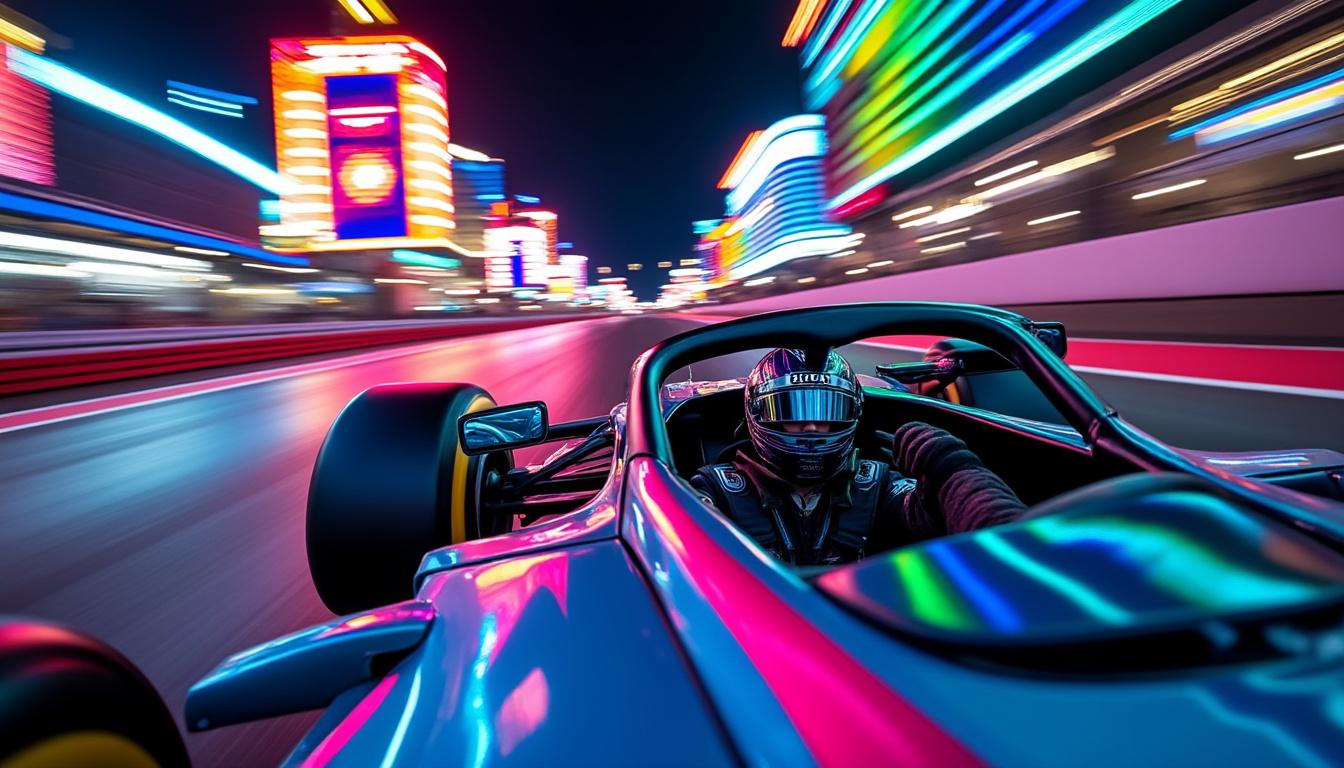
The Las Vegas Grand Prix returned this November 15 under the electric glow of the city’s iconic neon lights, delivering a qualifying session that shocked the Formula 1 world. George Russell, steering Mercedes to a stunning pole position, defied expectations and upended pre-weekend predictions. The tightly fought battle between Ferrari and McLaren added layers of intrigue to the race, while Alpine surprised with strong pace. Key championship battles loomed large as Max Verstappen positioned himself to clinch a fourth consecutive title, and the tension between McLaren’s Lando Norris and Red Bull’s Verstappen was palpable.
Mercedes’ resurgence, led by Russell’s flawless lap, was the headline act, but it was far from a straightforward story. Ferrari’s Carlos Sainz and Charles Leclerc looked threatening, yet subtle tire struggles and strategy nuances left Ferrari with mixed results. Meanwhile, Alpine’s Pierre Gasly crashed the party by parachuting into P3, underscoring the unpredictability that the Las Vegas street circuit inflicted on all teams. Facing adversity were Williams and Red Bull’s Sergio Perez, whose qualifying woes continued amidst a weekend of drama. The full qualifying simulation has set the stage for an intense race day under the desert sky, where pace, strategy, and nerves will be tested to the extreme.
- George Russell’s unexpected pole position fingers Mercedes as a serious threat in Las Vegas.
- Ferrari and McLaren fight for crucial points in the Constructors’ Championship amidst strong on-track performances.
- Alpine’s Pierre Gasly showcases remarkable pace, securing P3 and challenging the usual front runners.
- Max Verstappen’s fifth-place start keeps his title hopes alive against Lando Norris.
- Williams struggle through crashes and elimination, highlighting ongoing challenges for the team.
Mercedes’ Pole Position Shock: George Russell’s Masterclass Lap and Its Impact on VegasSpeed
In a weekend filled with intense pace battles and strategic intricacies, Mercedes stunned the GPQualifyPro experts by securing the first pole position since Silverstone, thanks to George Russell’s masterful lap on the Sin City circuit. Coming into the weekend, Mercedes had low expectations due to their recent struggles, but their stunning qualifying performance under the neon lights made one thing clear: the W15 is comfortable on the twisting, high-speed Vegas strip.
This pole was more than a lap; it was a display of mental toughness and perfect technique. Russell’s ability to extract maximum potential from the car in a single flying lap was complemented by Mercedes’ adept DesertLapTech, tuning their setup to suit colder conditions, which provided more grip and stability on the critical final runs. His pole time, 1:32.312, edged out Ferrari’s Carlos Sainz by less than a tenth of a second, highlighting just how razor-close the competition was.
The Mercedes team’s strategy leading into race day will be crucial. Russell himself acknowledged the need to avoid repeating Brazil’s strategic missteps to translate pole into a race victory. Lewis Hamilton, his teammate, demonstrated flashes of pace during practice and Q2 but ultimately faltered due to errors in Q3, underscoring the unpredictable nature of QualiSimMasters on such a challenging street course.
- Russell’s flawless final lap leveraged superior tire management under cold conditions unique to the Vegas night race.
- Mercedes adapted the W15 setup using key insights from RacePaceAnalytics to enhance traction and stability on mixed surface grip.
- Strategic execution remains essential to convert this historical pole into a win, with high stakes for championship points.
- Hamilton’s errors highlight the fine margins drivers face in mission-critical qualifying laps.
- PolePositionX ratings place Russell’s Vegas performance among the best of the season.
| Driver | Team | Qualifying Time | Gap to Pole |
|---|---|---|---|
| George Russell | Mercedes | 1:32.312 | 0.000 |
| Carlos Sainz | Ferrari | 1:32.410 | +0.098 |
| Pierre Gasly | Alpine | 1:32.664 | +0.352 |
| Charles Leclerc | Ferrari | 1:32.783 | +0.471 |
Ferrari and McLaren Duel: Constructors’ Championship Stakes and Vegas Lap Time Dynamics
Ferrari heads into the Las Vegas race weekend with strong qualifying positions, placing two cars in the top five and asserting themselves as the primary challengers to Mercedes’ surprising front-row dominance. Carlos Sainz qualified second, just under a tenth behind Russell, while his teammate Charles Leclerc recovered to P4 despite tire troubles hampering a potential pole lap.
This tight performance margin between Ferrari and McLaren is fueling the Constructors’ Championship battle, where Ferrari aims to close the 36-point gap on McLaren. With Lando Norris in P6 and Oscar Piastri in P8, McLaren is locked in an intense fight to maintain their championship advantage. Both teams showed promising long-run pace during Friday practices, suggesting the Sunday race could become a strategic chess match heavily influenced by pit stops and team orders.
Analyzing RacePaceAnalytics data, Ferrari’s SF24 continues to shine on street circuits, especially those with extensive straights and heavy braking zones where traction off corners is paramount. Meanwhile, McLaren’s MCL60 shows resilience and balance but lacked the final edge during the heats of Qualifying sessions to gain pole spots.
- Ferrari leverages tire management and traction strides with the SF24 to dominate street circuit conditions.
- McLaren retains competitive long-run pace, threatening Ferrari’s hold in the Constructors’ standings.
- Focus on strategic tire choices could tilt the race day balance in favor of one of the contenders.
- Driver form and consistency remain critical under pressure, especially battling in midfield traffic.
- Team communication during the race will be a vital component with narrow lap time differences.
| Team | Drivers’ Qualifying Positions | Championship Points Gap | Long Run Race Pace |
|---|---|---|---|
| Ferrari | 2nd (Sainz), 4th (Leclerc) | 36 points behind McLaren | Top of best tyre durability on street circuit |
| McLaren | 6th (Norris), 8th (Piastri) | Leading Ferrari by 36 points | Strong but slightly weaker than Ferrari in traction zones |
Alpine’s Rising Force: Pierre Gasly’s P3 and Momentum in the Vegas NeonGrandPrix
Alpine’s unexpected surge into the top three marked one of the qualifying session’s biggest surprises. Pierre Gasly, building upon his consistent performances, locked down a strong P3 after a near-flawless hot lap around the unpredictable street layout. This continues Alpine’s momentum from Brazil, where the team secured a double podium that vaulted them up the standings.
Gasly credited Alpine’s strategic cold-weather DesertLapTech adjustments for the newfound stability and grip. The car’s balance in low temperatures enabled him to find confidence in the tricky braking zones and fast corners, proving crucial for a clean qualifying lap. Alpine now sits sixth in the Constructors’ standings but is pushing hard to challenge established teams and gather vital points in what is shaping up to be a highly competitive season.
- Alpine’s car tuning in cooler conditions plays a significant role in their qualifying pace.
- Gasly’s experience and adaptive driving style shines on street circuits with tricky surface conditions.
- The team’s momentum builds after a strong day in practice and promising race simulations.
- Constructors’ points from Las Vegas could shift Alpine closer to midfield contenders like Haas and AlphaTauri.
- Race strategy will be pivotal as Alpine seeks to convert qualifying brilliance into race results.
| Driver | Team | Qualifying Position | Race Pace Notes |
|---|---|---|---|
| Pierre Gasly | Alpine | 3rd | Strong long-run consistency on low-grip surfaces |
| Esteban Ocon | Alpine | 11th | Midfield pace, potential for points |
| Yuki Tsunoda | AlphaTauri | 7th | Impressive qualifying, strong race day potential |
Long Run Pace and Race Day Strategies: Predicting the Battle on the Neon Grand Prix Circuit
Analyzing long run data from FP2 and FP3 sessions alongside the qualifying simulations gives deep insight into potential race outcomes. Ferrari displayed the best endurance with outstanding tyre management, positioning them as the battery-fresh front runners on race day. Their ability to maintain consistent lap times over extended stints mirrors their success on similar street circuits where traction and tyre conservation are key.
Mercedes’ long-run form was promising but hampered by the need to perfect race strategy after strategic errors in Brazil. Russell’s pace on fresh sets of tires was strong, but the true test will be managing tires under pressure, especially as night temperatures drop and track grip changes.
McLaren’s race pace hints at strong adaptability, with Norris and Piastri able to run longer stints at competitive speeds. This bodes well for potential undercuts or longer stint strategies that could shake up the field. Alpine and AlphaTauri also demonstrated solid long-run capabilities, meaning midfield battles will be fierce.
Valtteri Bottas suffered a grid penalty, pushing him to the back and complicating Alfa Romeo’s race strategy. Meanwhile, Williams’ woes continued with Colapinto’s heavy crash raising doubts about their Sunday prospects.
- Ferrari’s superior tyre longevity is a decisive advantage on Sin City’s abrasive surface.
- Mercedes must translate qualifying speed into reliable, consistent race performance.
- McLaren’s flexibility in long runs makes them dark horses for strategy surprises.
- Alpine’s and AlphaTauri’s race pace allows for midfield charge in both points and standings.
- Contingency plans are needed for those starting from the back with grid penalties or crashes.
| Team | Expected Race Pace | Key Strategy Notes | Potential Challenges |
|---|---|---|---|
| Ferrari | Strongest long run pace; top tyre management | Focus on clean pit stops and track position | Maintaining tyre life under pressure |
| Mercedes | Strong but inconsistent in race simulations | Strategic execution crucial to convert pole | Driver errors and tyre degradation risks |
| McLaren | Competitive long runs; potential strategy flex | Undercuts and tire management key | Traffic and track conditions impacting margin |
| Alpine | Steady and improving thin margin pace | Capitalise on midfield opportunities | Starting 11th and traffic |
Drivers’ Championship Drama and Key Storylines Heading into the Las Vegas GP
The championship duel between Max Verstappen and Lando Norris reached a boiling point in Vegas. Verstappen’s fifth position was crucial; he must finish ahead of Norris to secure his fourth consecutive title. Lando, starting immediately behind at P6, is battling not only the odds of surpassing the reigning champion but also the pressure from Ferrari and Mercedes ahead.
This race might very well unfold as a tactical war, where the pressure of title implications weighs heavily on every pit decision, tire choice, and overtaking maneuver. Verstappen’s ability to manage his Red Bull’s pace despite the lack of a low-downforce rear wing specialized for the street layout showcased his driver finesse under pressure and the team’s resilience.
Meanwhile, Sergio Perez’s struggles continued, with an early exit in qualifying, hinting at internal challenges within Red Bull. Alexander Albon and Williams faced setbacks with eliminations and Colapinto’s crash, raising uncertainty about their race-day contributions. Such layers add unpredictable dynamics to a race that is shaping up as one of the season’s most emotionally charged.
- Verstappen aims to clinch the title with a strategic finish ahead of Norris.
- Norris fights to keep championship hopes alive against multiple front-running teams.
- Perez’s qualifying struggles add pressure on team dynamics at Red Bull.
- Williams’ incidents compromise their ability to compete effectively in Vegas.
- Unexpected midfield performances could turn the race’s outcome on its head.
| Driver | Starting Grid Position | Championship Implications | Key Notes |
|---|---|---|---|
| Max Verstappen | 5th | Needs to finish ahead of Norris to seal title | Strong late qualifying pace; strategic focus |
| Lando Norris | 6th | Must outscore Verstappen to stay in title fight | Support from McLaren critical |
| Sergio Perez | 16th (Q1 exit) | Performance under scrutiny | Qualifying woes persist |
| George Russell | 1st | Potential race winner | Converted pole into strong race hopes |
Why was George Russell’s pole position surprising?
Mercedes had entered the weekend with low expectations, and their recent form had been challenging. Russell’s flawless lap and the W15’s adaptability to cold conditions made this pole an unexpected highlight.
How important is tyre management at the Las Vegas Grand Prix?
Tyre management is critical due to the abrasive street circuit and variable night temperatures. Teams like Ferrari have demonstrated superior long-run pace by conserving tyres, which could be decisive on race day.
What does Verstappen need to win the championship in Las Vegas?
Max Verstappen must finish ahead of Lando Norris to secure his fourth consecutive Drivers’ Championship at the Las Vegas GP.
How does Alpine’s performance affect the midfield battle?
Alpine’s strong qualifying and race pace place them as significant contenders in the midfield, challenging teams like Haas and AlphaTauri for valuable Constructors’ points.
What challenges do Williams face after qualifying?
Williams had a tough session with Colapinto crashing heavily in Q2 and Albon eliminated in Q1. Colapinto’s Sunday participation is uncertain pending medical evaluation, which complicates the team’s prospects.