Ferrari’s engine woes at high-speed tracks have haunted the team throughout Formula 1’s turbo-hybrid era. Every attempt to close the gap to Mercedes, especially during the 2017 and 2018 seasons, has unraveled at circuits where pure power and energy management matter most. Now, with Silverstone and Spa-Francorchamps looming, two of the calendar’s most punishing venues for power units. Ferrari faces a crisis that’s all too familiar. This time, the warning comes not from rivals or pundits, but from within.
Power Unit Performance: Ferrari’s Recurring Blind Spot
The evidence is impossible to ignore, and it’s coming straight from Ferrari’s own garage. Lewis Hamilton’s win in Barcelona was supposed to mark a turning point, a sign that the latest ADUO upgrade had finally delivered the breakthrough Ferrari needed. Instead. Hamilton, now wearing red, offered a stark reality check ahead of Silverstone: Ferrari remains well behind Mercedes in both engine power and hybrid energy deployment.
Hamilton didn’t sugarcoat the situation. “We lose quite a lot of time. I think it’s like four tenths that we lose in a straight line. It’s hard to recover that through corners,” he told reporters before the British Grand Prix. Four tenths on the straights alone is a deficit no amount of cornering skill can erase.
But the problem runs deeper than just horsepower. Mercedes’ “phenomenal” edge in energy management. Hamilton said, will only become more decisive at Silverstone and Spa, where long, flat-out sections and a lack of heavy braking zones put hybrid systems under maximum strain. “There’s only a few corners to charge the engine, so the MGU-K will be switched off for a large portion of the lap and that’s where we will struggle probably the most. The deficit could be twice as big,” Hamilton warned.
Silverstone and Spa: The Litmus Test for 2026’s Energy Rules
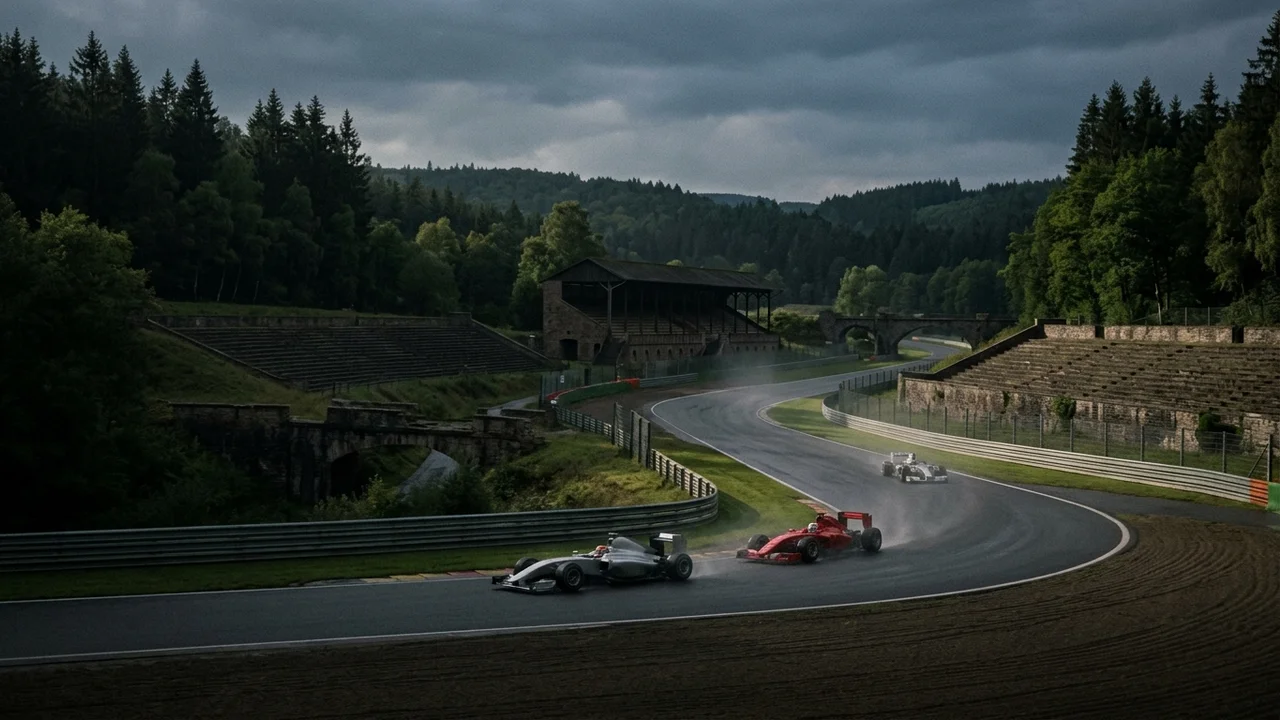
Silverstone and Spa have always exposed the truth about engine suppliers. Ferrari’s lack of top-end power has left it vulnerable to Mercedes-powered cars for years, especially when energy management becomes the deciding factor. Now, with the 2026 regulations looming, the stakes are even higher.
The new power units demand significant braking zones to recharge their hybrid systems. Yet, as Sergio Perez and Max Verstappen have pointed out. Silverstone is almost entirely high-speed, offering few chances to harvest energy. Drivers will be forced to use fast corners as “charging stations,” twisting racing lines and cornering strategies into something unrecognizable. Simulator runs at Silverstone with current cars have become a running joke among drivers, with Verstappen admitting he “had to laugh” at the absurdity of managing energy at such a track.
“Super clipping”, where the battery is charged against the engine at full throttle, has been curbed in qualifying by recent rule tweaks. Still, the core issue persists. During races, the lack of energy recovery at Silverstone and Spa will lay bare any power unit shortcomings.
Ferrari’s Upgrades: Too Little. Too Late?
Austria saw Ferrari roll out its first ADUO upgrade of the season, a package meant to address straight-line speed and energy deployment. Charles Leclerc, though, was quick to concede that race pace is still missing. The team has “identified lessons” from Austria, but Leclerc is already bracing for “even greater challenges” at Silverstone and Spa.
Pressure on Ferrari’s technical leadership is mounting. After years of chasing Mercedes, why does the Scuderia still arrive at the sport’s most power-sensitive weekends with a deficit that, by Hamilton’s estimate, could “be twice as big” as before? Even after a much-hyped engine upgrade, why is Ferrari preparing for damage control instead of fighting for victory?
As the British Grand Prix weekend gets underway. Ferrari’s perennial power unit weakness faces its harshest examination yet. Hamilton’s message is blunt: “We’ve got to continue to work to maximise what we can, score as many points as we can until we can close that deficit.” For Ferrari, the cycle threatens to repeat itself, unless the team finally cracks the energy management puzzle that has defined a decade of frustration.