Audi’s maiden works season has become a focal point for both rivals and analysts as Formula 1 heads into its summer break. Eighth in the constructors’ standings, 12 points on the board, and a clear surge in form at power circuits like Silverstone and Spa: these are the numbers shaping the conversation around the German manufacturer’s first half of 2026.
Rivals have started to take notice. Audi, inheriting the underfunded Sauber operation, has spent the opening ten rounds reshaping its foundation with an eye on fighting for world championships by 2030. The team’s recent points haul signals upward momentum, especially in July, where an eighth-place finish at the British Grand Prix and a long-awaited return to the points column have validated the project’s direction. Audi is beginning to convert underlying pace into results, at least on paper.
Attention in the technical community has zeroed in on Audi’s power unit, the company’s first foray into Formula 1 engine manufacturing from its Neuburg facility. The debut effort has earned respect, but the numbers tell a tougher story. Audi’s engine still lags behind established benchmarks, particularly Mercedes, exposing weaknesses in battery deployment and energy management. Poor starts have cost the team positions off the line, a recurring issue in 2026. Reliability remains a sore spot, highlighted by race-day non-starts for both drivers and a bizarre incident in Austria when gravel triggered Nico Hulkenberg’s kill switch.
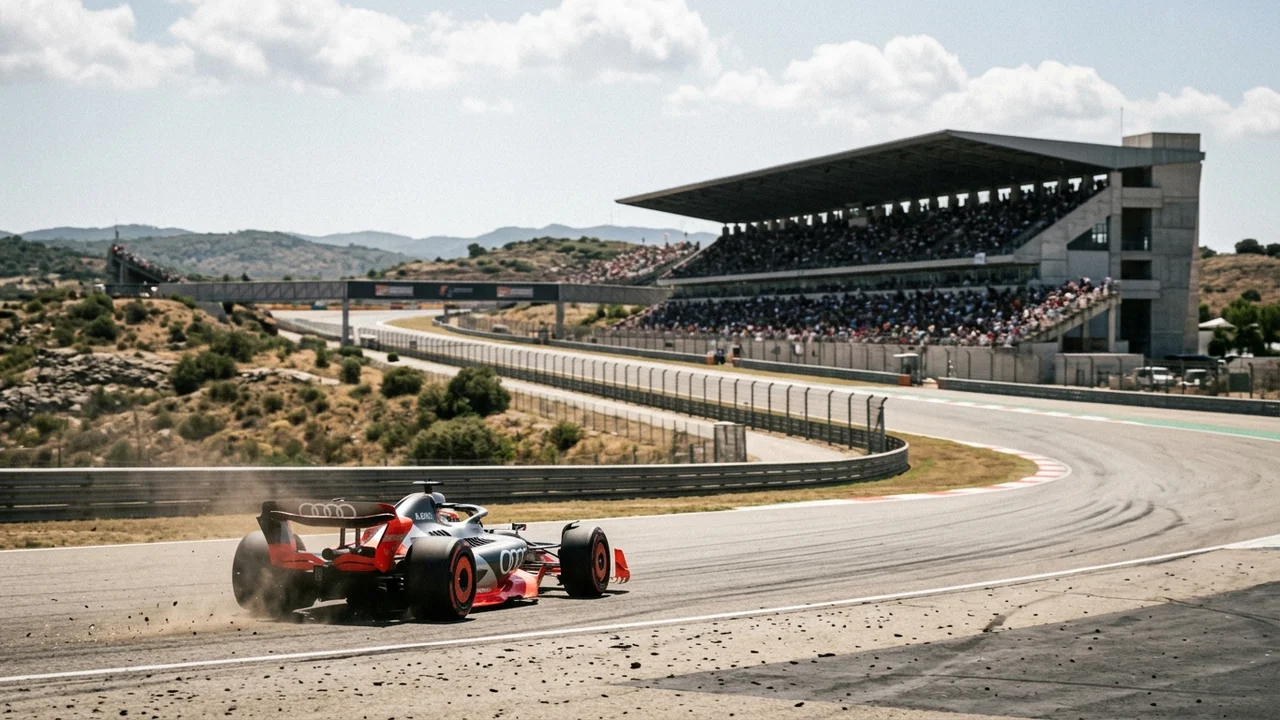
Audi’s driver lineup offers a blend of experience and promise. Veteran Nico Hulkenberg and rookie Gabriel Bortoleto have given engineers a valuable spread of data. Hulkenberg’s campaign has been disrupted by reliability issues, while Bortoleto’s ability to extract pace from the evolving package is under close scrutiny. This pairing has helped Audi pinpoint where setup and operations are delivering points, and where the gaps remain.
Progress at high-power venues like Silverstone and Spa stands out. These circuits provide a clear test of power unit strength and chassis efficiency. Audi’s step forward at these tracks is being dissected as proof that technical upgrades and operational tweaks are starting to pay off, at least in certain conditions. Inside the garage, fighting at the front of the midfield at these venues has lifted spirits and set a benchmark for future development.
Mattia Binotto, Audi’s CEO, is keeping expectations grounded. “If you don’t yet have all the people, tools, and space you need, you can’t expect extraordinary results overnight,” he said. Analysts see Audi’s current performance as the result of steady, data-driven progress, not sudden leaps. The team remains, in Binotto’s words, “still the Sauber of last year, with everything we’re building on top,” a sentiment reflected in their statistical profile: improved, but not yet a force for transformation.
Audi’s early progress is also shifting the conversation about what’s possible for new works entrants. Observers have pointed out that Audi’s points and midfield competitiveness are recalibrating expectations for how quickly a manufacturer can make an impact after a takeover. Some are even referencing probability models for team progress in debut seasons as a yardstick.
At mid-season, the verdict is unmistakable. Audi’s debut is being judged by the pace of measurable improvement, not podiums. Gains at power tracks, incremental reliability fixes, and a steady trickle of points have built a data set that hints at upward mobility, while underscoring the scale of the challenge ahead. The numbers, not the headlines, will determine whether Audi’s foundation can carry them to world championship contention by 2030.