Formula 1’s development race is no longer just about finding performance. It’s about who can afford to unleash it at the right moment. At Zandvoort, Mercedes’ late team order, swapping George Russell and Kimi Antonelli while McLaren celebrated another win, offered a sharp snapshot of the sport’s growing financial divide.
Lando Norris, fresh off his Dutch Grand Prix victory, watched the highlights in the cool-down room. When he saw Russell move aside for Antonelli in the closing laps, Norris couldn’t resist a dig: “What a move!”
His sarcasm landed because Mercedes had already tried everything to disrupt McLaren’s charge. Antonelli switched to soft tyres late, hoping to chase down Norris. Russell, after a back-and-forth on the radio, was told to yield. None of it changed the outcome. Norris took his second straight win, following up his Budapest triumph.
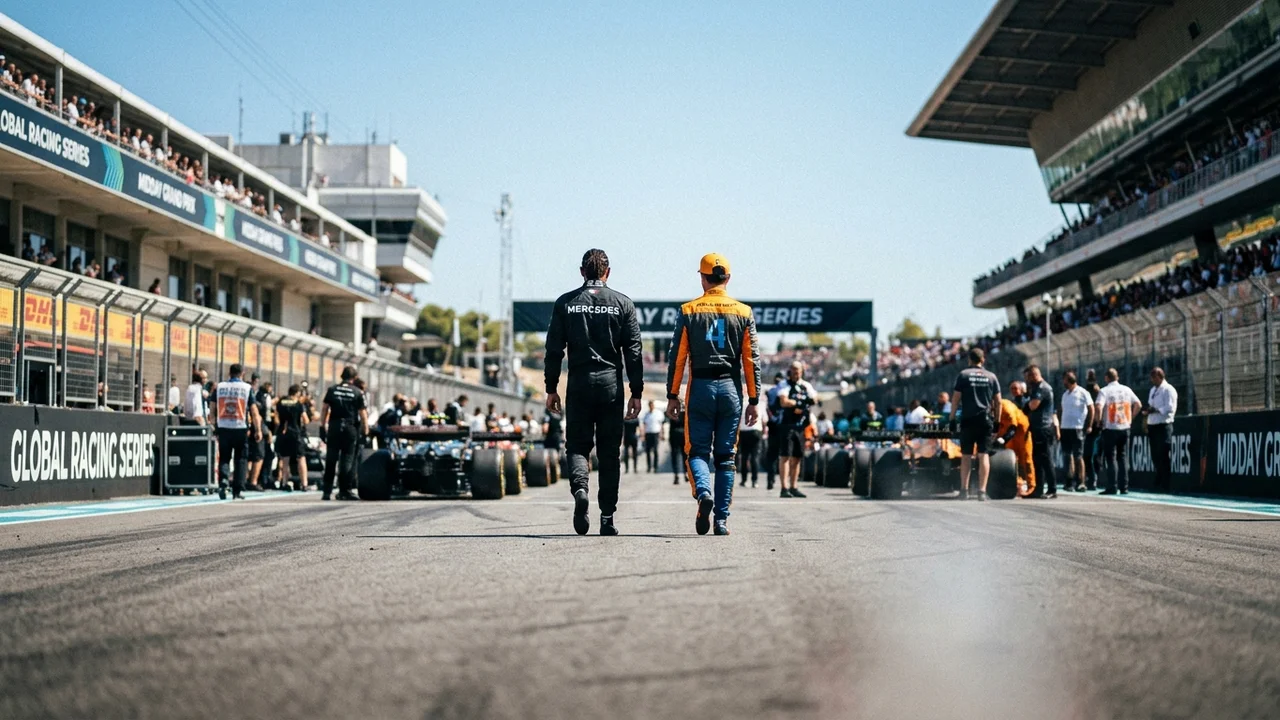
Mercedes’ team orders were a tactical play, squeezing every point from a tough weekend. But the moment also exposed a deeper issue. Team principal Toto Wolff admitted Mercedes simply can’t keep up with McLaren and Ferrari’s upgrade pace, at least not under the current budget cap.
Wolff explained that Mercedes has spread its $215 million cost-cap allowance across the season, targeting moments when new parts would deliver the biggest points haul. That strategy has left them unable to fast-track development like their rivals.
“We haven’t got the money to put developments on the car,” Wolff said. “I said before that we are trying to evenly split that through the season based on our calculations of when we can bring the biggest updates and optimising the championship points. But we just can’t do what we can’t do.”
McLaren’s upgraded MCL40 has shifted the balance of power. Norris has taken pole and victory in both Hungary and the Netherlands. Russell pointed out that those tracks, with their long corners and high tyre wear, play to McLaren’s strengths.
Russell finished third at Zandvoort and wasn’t surprised by Norris’s pace. “It’s a very similar circuit with the long corners, high tyre degradation, with the two-stop strategy, so there’s a lot of similarities between the two circuits,” he said. “I think this may continue for the coming two or three races until we start to bring more to the car, and fingers crossed our competitors don’t.”
That’s a telling admission from a driver whose team is publicly counting every dollar. Since the Canadian Grand Prix in May, Mercedes has brought few major updates. Meanwhile, McLaren and Ferrari have kept pushing, and the results show it.
Wolff suggested the real test will come later in the year. “You will see towards the end of the season whether they are going to be able to deploy as much stuff onto the car as they do now,” he said, hinting that rivals may have front-loaded their spending.
For now, McLaren is making its investment count. Norris credited overnight work with his engineers for transforming his race after a tough sprint left him third on Saturday. He called it proof of progress both in his off-track preparation and his driving.
Oscar Piastri’s weekend showed the flip side. He struggled to extract the maximum from the same car, qualifying fourth, just 0.142 seconds behind Norris, before finishing sixth. Norris, meanwhile, sits fourth in the standings, 83 points adrift of Antonelli.
Russell expects Mercedes to be a bit stronger at Monza, but he didn’t sugarcoat the challenge. “McLaren is the team to beat right now.” With no major W17 upgrades due until the series heads overseas in October, Mercedes will have to keep searching for tactical edges while their rivals turn spending into speed.