
The 2025 MLB offseason is shaping up to be a chessboard where savvy moves, bold signings, and sharp trades are rewriting team destinies. As the General Manager meetings conclude and MLB’s winter period unfolds, franchises are turbocharging their rosters and positioning for supremacy in one of baseball’s most competitive eras. From powerhouse clubs like the Los Angeles Dodgers and New York Yankees to rising contenders and long-suffering teams, the art of roster building is on full display. This season’s roster changes are not just about big names or expensive contracts—they’re about strategic fits, smart budget management, and mastering free agency and trade deadlines. The true test for these teams will be how those offseason efforts translate on the diamond when the season kicks off.
This pulse check on the MLB offseason reveals that it’s not just quantity of moves or headline-grabbing signings that count; it’s the quality and timing that elevate franchises. Some teams have embraced free agency to plug glaring holes, others have carefully crafted trades that maximize value without breaking the bank, while a few have blended young talent promotions with experienced acquisitions to create balanced rosters. The domino effect from these decisions will steer pennant races and postseason hopes. Fans eager to track these developments and prognosticate the impact behind the headlines will find plenty to dissect in every club’s unique approach.
Key highlights so far this offseason include:
- The Los Angeles Dodgers’ pursuit of a reliable closer—signing Edwin Diaz to stabilize their bullpen after Tanner Scott’s struggles.
- The Toronto Blue Jays targeting Kyle Tucker as a power-hitting complement to Vladimir Guerrero Jr.
- The Detroit Tigers enhancing their lineup with Gleyber Torres and bolstering pitching with Jack Flaherty’s return.
- The New York Yankees shoring up center field by re-signing Cody Bellinger and making Max Fried a rotation cornerstone.
- The Chicago Cubs making a statement by acquiring Kyle Tucker and young arm Tatsuya Imai to strengthen lineup and rotation.
As roster moves continue to ripple across MLB, each team is placing calculated bets on talent and chemistry to deliver winning seasons. Whether it’s making waves in the free agency market or executing shrewd trades, the ingenuity of these moves reveals much about team strategy and long-term goals.
How the MLB Offseason’s Strategic Roster Moves Are Shaping the 2025 Season
Major League Baseball’s offseason has often been a period of cautious maneuvering, but recent moves indicate teams aren’t content with playing it safe. The 2025 offseason demonstrates a surge in aggressive roster building combined with measured financial strategy, spotlighting how teams blend player acquisitions through free agency, trades, and contract extensions to solve immediate roster needs while eyeing sustainable success.
Take, for example, the Los Angeles Dodgers. Known for their deep pockets and willingness to chase marquee names, they have surprised fans by emphasizing roster balance over mega deals. The Dodgers chose to address their bullpen’s inconsistency by targeting the top-tier free agent closer Edwin Diaz — a move steeped in pragmatism to stabilize the ninth inning after Tanner Scott’s uneven 2025. Diaz, a former two-time All-Star with electric stuff, fits perfectly into a Dodgers squad loaded with starting pitching depth thanks to injury recoveries like River Ryan and Gavin Stone.
Meanwhile, the Toronto Blue Jays sharpened their bat-heavy attack by locking in Kyle Tucker. His presence alongside Vladimir Guerrero Jr. promises to transform Toronto’s offense into one of the most feared in baseball, a combination that could finally take them all the way after falling just short in the World Series. Tucker’s left-handed power complements the Jays’ core perfectly, highlighting the offseason’s trend of constructing lineups that are both dynamic and balanced.
On the trade front, the Milwaukee Brewers stand out for their clever approach. Despite budget constraints, they are exploring deals like acquiring Washington’s left-hander MacKenzie Gore. Such trades signal an emphasis on youth and upside, aiming to maintain their competitive edge in the NL Central without breaking the bank. This move also underscores one of the offseason’s themes: leveraging farm system depth to acquire immediate major league impact, a dance well-played by financial-savvy clubs.
The New York Yankees have embraced continuity and smart re-signings, capturing Cody Bellinger to cover the center field gap and banking on a rotation led by Max Fried. While the team missed out on free agents like Juan Soto, their offseason strategy of securing value signings and focusing on positional flexibility has kept their roster competitive in one of MLB’s toughest divisions. The Yankees’ careful balancing act between payroll management and on-field competitiveness illustrates another major offseason principle: durable team chemistry alongside tactical roster improvements.
Lastly, the Detroit Tigers exemplify the rewards of building through calculated additions rather than headline grabs. Complementing Tarik Skubal’s emerging dominance, they signed versatile infielder Gleyber Torres and secured pitching reinforcements such as Jack Flaherty and reliever Tommy Kahnle. These moves have transformed Detroit into a serious postseason threat, proving that offseason success isn’t solely about signing superstars but knowing which pieces to put around your core to maximize performance.
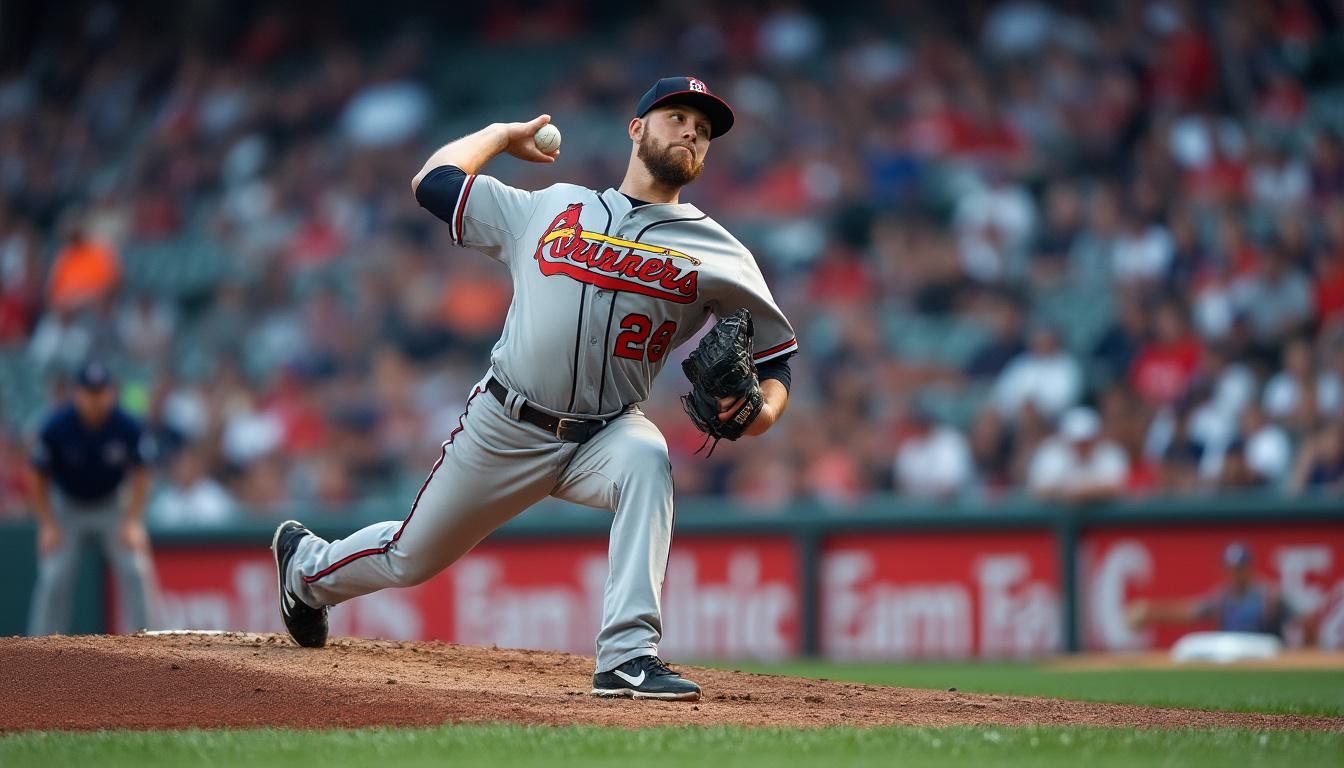
Top Free Agency Signings Impacting Team Building in the 2025 MLB Offseason
Free agency remains the most electrifying and unpredictable phase of the MLB offseason. This year’s crop has seen teams sharpening their rosters by snapping up players who not only fill positional gaps but elevate clubhouse dynamics and fan excitement.
Kyle Tucker’s signing with the Toronto Blue Jays marks a perfect example of a franchise strategically targeting talent that complements its star players. Tucker’s ability to generate both power and high on-base percentages offers robust lineup protection to Vladimir Guerrero Jr., amplifying the Jays’ scoring potential in a demanding AL East.
The 2025 MLB free agency also featured savvy pitchers like Dylan Cease, who found a new home with the Baltimore Orioles. The Orioles’ signing of Cease signals a bold transformation aimed at revitalizing their rotation after years of pitching struggles. Cease’s ability to generate strikeouts and ground balls adds a much-needed dimension for a team hungry to climb the AL East standings.
Similarly, the Chicago Cubs’ acquisition of right-hander Tatsuya Imai represents a calculated investment in youth with immediate upside. Imai’s prior four years in Asia gave scouting departments plenty of data to assess, and his relatively low financial cost means the Cubs balance payroll pressures while injecting starting rotation depth. The move aligns with a league-wide trend favoring efficient signings that optimize room under budget thresholds.
Other free agent highlights include the New York Mets’ addition of Framber Valdez, enhancing a rotation already among the best in MLB. Valdez has brought stability and length to Mets innings, pairing well with David Stearns’ philosophy of mixing established talent with breakout potential. Plus, longtime Mets Pete Alonso’s re-signing reinforced the lineup’s heart and consistency, providing a load-bearing foundation alongside recent stars like Juan Soto.
The Royals’ pivot to sign second baseman Gleyber Torres demonstrates a desire to inject on-base skill and veteran savvy into their middle infield. Though the Royals are still building, targeted signings such as Torres aim to provide offensive leadership while developing younger players, a strategy that many clubs currently adopt amidst player development uncertainties.
These signings demonstrate a wider offseason lesson: teams are not just filling rosters—they’re building identities, blending offense and pitching, experience and youth, under the constraints and opportunities presented by MLB’s competitive balance and salary framework.
Trade Moves Reshaping MLB Team Strategies and Rosters
Player trades provide teams with the flexibility to address immediate needs and future prospects simultaneously. The 2025 MLB offseason has been no exception, with several franchises executing high-impact swaps designed to recalibrate their rosters.
The Philadelphia Phillies’ pursuit of free agent third baseman Alex Bregman is a strategic gambit to lead their next generation. After a postseason exit, the Phillies prioritized adding an impact bat to stabilize their middle lineup and provide veteran leadership, a move that perfectly captures the intent behind savvy offseason roster management. Offseason trades like this underline the critical balance between star power and clubhouse culture.
Boston Red Sox’s midseason trade and offseason efforts to acquire Minnesota’s ace Joe Ryan epitomize aggressive rotation enhancement. Ryan’s addition alongside Garrett Crochet, who is chasing the AL Cy Young award, signals Boston’s commitment to securing frontline pitching. The Red Sox, working under ownership financial limits, leveraged trades to address rotation holes creatively, showing how resourcefulness can overcome budget constraints.
St. Louis Cardinals’ Brendan Donovan acquisition by the Cleveland Guardians showcases how trading for flexible, multi-position players can shore up weak spots while providing insurance for the future. Donovan’s versatility offers Cleveland tactical options at second base and in the outfield—precisely the kind of roster adaptability that’s invaluable across a 162-game grind.
Milwaukee’s crafty move to trade for MacKenzie Gore emphasizes maximizing limited financial resources by exchanging prospects for immediate pitching impact. This approach reflects a broader MLB trend where teams with rich farms are willing to spin future talent for current competitiveness, especially in tight divisions.
Trades not only alter rosters—they send ripples through front office strategies. The balance of team building, payroll management, and fan expectations makes each transaction a high-stakes play. Evaluating the symbiosis between trades and free agency unlocks the full narrative of MLB’s offseason dynamics.
Emerging Young Talents and Breakthroughs Highlighting the 2025 MLB Offseason Success
The offseason narrative isn’t just about seasoned stars or money moves. The rise of young players breaking into the majors and reshaping team fortunes is increasingly pivotal. This year’s MLB offseason saw numerous young talents either retained or integrated into the fold, often becoming immediate difference-makers.
The Detroit Tigers’ faith in players like Spencer Torkelson and the promising infielder Kevin McGonigle reflects a commitment to developing homegrown talent alongside strategic acquisitions such as Gleyber Torres. Torkelson’s power-hitting and McGonigle’s dynamic defense signal a new Tigers era where youth acceleration matches smart offseason roster decisions.
Similarly, the Chicago Cubs’ offseason was marked by the transformative addition of Kyle Tucker—a player whose impact transcended mere stats. Tucker’s arrival elevated surrounding teammates, lifting the entire lineup to a new level. Meanwhile, pitchers Matthew Boyd and Colin Rea steadied the rotation amid key injuries, exemplifying how young or underrated players can provide crucial stability.
Young pitching phenom Cal Raleigh helped the Seattle Mariners with rare 60-home-run power from the catcher position, a production that most thought was nearly impossible. Alongside Julio Rodriguez, this dynamic duo provided a foundation from which Seattle hopes to build sustained playoff contention. Their young pitching staff’s depth crafted through both development and offseason tweaks also boosts prospects for the AL West crown.
The New York Mets’ bullpen depth, strengthened by season breakout relievers like Clay Holmes and Griffin Canning, further illustrates how young talent paired with smart offseason moves can create formidable pitching staffs. This internal growth rounds out team efforts through free agency and roster shifts.
This blend of young stars and careful recruitment underlines a central MLB offseason truth: long-term success hinges on combining veteran experience with an infusion of youthful energy and upside. Fans can watch how these emerging talents evolve into franchise cornerstones as a thrilling subplot of the 2025 season.
In-Depth Look at Offseason Moves Impacting Baseball Team Perspectives and Fan Expectations
Every MLB offseason brings with it the feverish anticipation of fans and analysts alike, scrutinizing which roster moves will propel teams toward glory or plunge them into turmoil. The 2025 offseason, unfolding with a dynamic mix of signings, trades, and strategic budget management, offers a textbook illustration of how baseball’s high-stakes team building is as much about psychology as numbers.
Take the Yankees and Dodgers, two franchises with high expectations and large payrolls but differing approaches. As outlined in comparisons of their offseason strategies, the Yankees prioritized getting the right fit in center field with Cody Bellinger and strengthening pitching depth, while the Dodgers focused narrowly on bullpen fortification rather than blockbuster buys. These contrasting methods showcase that roster construction is never one-size-fits-all; it’s about aligning acquisition philosophy with organizational goals and financial realities.
The Tigers’ offseason, quietly one of the best in MLB, underlines how smaller-market teams can use precise signings and internal development to defy expectations. Fans have seen how additions like Gleyber Torres and Tommy Kahnle directly contributed to Detroit’s best MLB record and elevated playoff chances, making offseason decisions a critical narrative thread for team followers.
The Chicago Cubs’ approach — bringing in high-impact players like Kyle Tucker and Tatsuya Imai — reenergized fan enthusiasm and competitiveness. It’s a case study in how front offices craft fan confidence and team identity simultaneously. Fans don’t just want name recognition; they want smart roster moves that translate to on-field success.
Baseball’s offseason drama plays out off the field just as intensely as game-day heroics. Coverage of free agency, player trades, and roster movements—such as through updates found on MLB offseason rumors and stars—keeps fans engaged, providing a steady narrative arc during the cold months between seasons.
Here’s a breakdown of key factors influencing team and fan perspectives in the offseason:
- Financial flexibility: Teams balance competitive desires against budget constraints.
- Player fit and clubhouse culture: Acquisitions that ‘gel’ beyond on-field skills.
- Long-term strategy vs. short-term needs: Building for sustained success versus immediate results.
- Fan engagement: Offseason moves impact morale and attendance expectations.
- Analytics and scouting: Advanced data drives smarter acquisition choices.
As this offseason progresses, the teams that best coordinate these elements will be primed for both immediate impact and lasting success in MLB’s fiercely competitive landscape.
| Team | Key Offseason Move(s) | Projected 2026 Impact | Budget Strategy |
|---|---|---|---|
| Los Angeles Dodgers | Signed closer Edwin Diaz | Stronger bullpen, improved late-inning security | Selective spending, focus on key role players |
| Toronto Blue Jays | Signed outfielder Kyle Tucker | Enhanced lineup depth and power | Aggressive free agency pursuit |
| Detroit Tigers | Signed Gleyber Torres, re-signed Jack Flaherty | Balanced offense and rotation strength | Moderate spending, focus on undervalued assets |
| New York Yankees | Re-signed Cody Bellinger, Max Fried anchor rotation | Solidified center field, rotation depth | Smart budgeting, targeted role pitching |
| Chicago Cubs | Acquired Kyle Tucker and Tatsuya Imai | Improved lineup and youthful pitching addition | Balanced payroll with high-impact signings |
What has been the most impactful MLB offseason signing in 2025?
Kyle Tucker’s signing by the Toronto Blue Jays stands out for its offensive impact, complementing Vladimir Guerrero Jr. and strengthening the lineup dynamic significantly.
Which teams are leveraging trades most effectively this offseason?
Teams like the Milwaukee Brewers and Boston Red Sox have used trades to bolster their pitching staffs and address immediate roster needs while managing budgets.
How are smaller-market teams like the Detroit Tigers succeeding in the offseason?
Detroit combines well-timed free-agent acquisitions such as Gleyber Torres and internal development to build a competitive roster without extravagant spending.
Why are bullpen upgrades a major focus for teams in the 2025 offseason?
After late-inning struggles have cost several teams, reliable closers like Edwin Diaz and Robert Suarez are high-priority targets to secure wins in tight games.
Where can fans keep up with the latest MLB offseason roster moves and rumors?
Websites like Through Sports’ MLB offseason rumors provide comprehensive updates on free agency, trades, and signings.