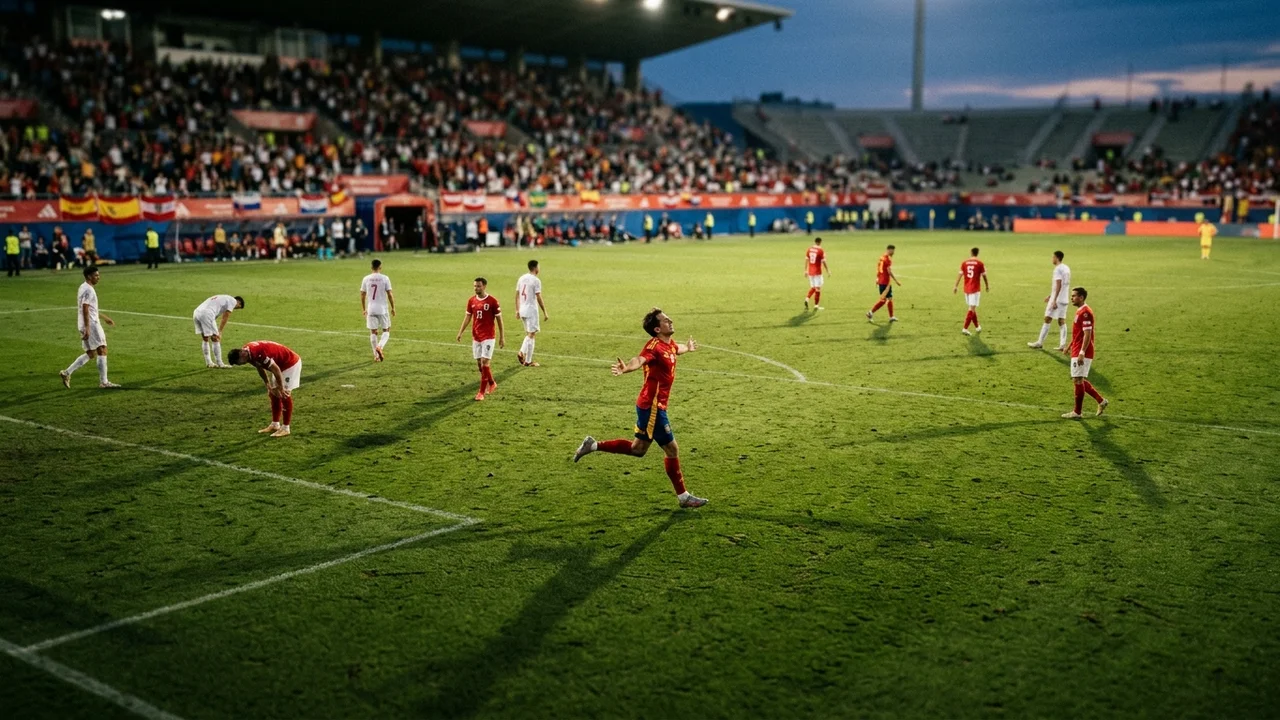
Relief swept through the Spanish ranks the instant Mikel Oyarzabal’s finish hit the net in Los Angeles. “It had been coming” wasn’t just a commentator’s cliché, but the prevailing mood on the pitch and in the stands. With the World Cup round of 32 match against Austria locked in tension. Oyarzabal’s breakthrough served as both a release and a warning to anyone doubting Spain’s intent.
Fans who had spent the first half gnawing on their scarves erupted at the goal. Their cheers mixed with a chorus of knowing nods. This was more than jubilation, it was satisfaction, as if Oyarzabal had restored order to a storyline threatening to go off script. The Spanish bench, restless and anxious moments before, surged to their feet in unison, arms raised, signaling that patience had finally paid off.
Austria’s reaction told its own story. Heads dropped, hands pressed to temples, resignation settling over the squad. They had weathered wave after wave of Spanish attacks, but inevitability crept in with every foray forward. Oyarzabal’s goal didn’t just change the scoreboard. It shifted the emotional landscape of the match. The Austria bench transformed instantly, defiant hope replaced by anxious calculation.

Oyarzabal’s strike delivered the kind of drama the World Cup demands. Every Spain supporter in Los Angeles seemed to hold their breath as he made his move. When the ball hit the back of the net, the eruption of noise was both cathartic and expectant. Spanish players converged on Oyarzabal, celebrating not just the goal, but a performance that had finally found its reward.
Commentators barely had time to catch their breath before echoing the consensus: “it had been coming.” Spain had been probing, pushing, and prodding at Austria’s defenses from the outset. Their movement was confident, their passing sharp, but the final touch had eluded them until now. Oyarzabal’s finish felt less like a surprise and more like the inevitable result of mounting pressure.
Stakes couldn’t have been higher. A World Cup knockout game in Los Angeles, both teams fully aware there would be no second chances. For Spain, the lead was more than an advantage, it was a psychological edge. Austria, after defending bravely, now faced the daunting task of chasing the game. Body language shifted immediately: Spain buoyed by belief. Austria suddenly aware of the mountain ahead.
Across the stadium. Spanish supporters seized the moment. Confidence swelled with every chant. The narrative had flipped. What began as a tense, cagey battle had become a story of Spanish ascendancy, with Oyarzabal cast as the protagonist. The crowd’s reaction mirrored the drama on the pitch: anticipation, then euphoria, and finally a sense of destiny reasserted.
Yet excitement was tempered by the knowledge that the match still hung in the balance. One goal can change everything, but knockout football is built on fine margins and sudden reversals. Spain’s camp understood the lead was precious, but also precarious. Austria, wounded but not finished, gathered themselves for a response. The next act of drama was already looming.
As the clock ticked on in Los Angeles, tension lingered in the air. Oyarzabal’s goal had shifted the match and the mood, injecting Spain with belief and leaving Austria searching for answers. In the World Cup, though, the story is never over until the final whistle.